
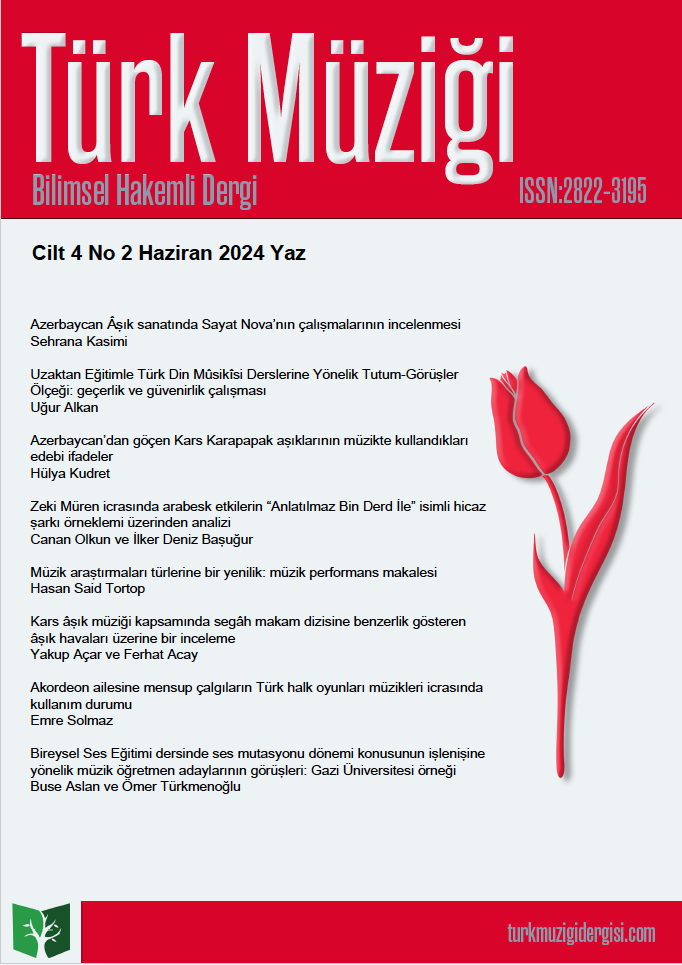
Analysis of arabesque effects in Zeki Müren’s performance on the sample of the Hijaz song “Anlatılmaz Bin Derd İle”
Keywords:
arabesk style, style, singing, casino, tavır, Zeki MürenAbstract
In the second half of the 20th century, the process that accelerated the adoption of the Arabesque style by some vocal artists coming from the Turkish music tradition was mainly influenced by the casinos (nightclubs), one of the influential areas of the entertainment sector, which transformed its program according to the changing customer potential. While the casino program was shaped by its unique internal dynamics, the most talked-about soloist who completely changed the system and stage layout with a new concept was Zeki Müren. During his mature period, Müren, as an influential artist in terms of style and vocal performance, brought a different dimension to Turkish art music vocal performance within the scope of his repertoire preferences and "Arabesque" expressions, embracing a more flexible performance style and introducing a new "style" specifically for the casinos. Müren, with his style and vocal performance shaping the rules in his field and considering his pioneering identity, the description of the arabesque influences reflected in his technical execution is remarkable in emphasizing the significance of the interaction between art and sociology in society. Furthermore, drawing from research that examines arabesque music from a sociological perspective and based on scientific data, this study aims to illustrate the impact of arabesque style on Turkish art music through the analysis of Zeki Müren's performance of "Anlatılmaz Bin Derd İle" from his youth and casino periods. During the process, a qualitative research method was followed to conduct a field scan and performance analysis. The book "Methods of Analysis and Interpretation in Turkish Music" by Gülçin Yahya Kaçar, presenting a highly comprehensive model in the stage of analysis and transcription of notes, was utilized. The elements of expression in the performance were notated using the Sibelius 6 program, and to ensure the accurate transfer of these elements, spectrogram images of notable sections were included. As a result of the research, it was observed that in the artist's early period performances, slight traces of elements from the casino version stand out, while in the casino version, the arabesque style is depicted with quite characteristic expressions through practices such as diction, embellishments, and rubato.
Author Biographies
Canan Olkun, Ankara Müzik ve Güzel Sanatlar Üniversitesi, Ankara, Türkiye
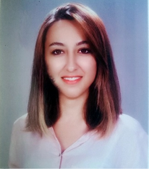
Canan Olkun 1990 yılında Konya’da doğdu. Müzik hayatına Konya Çimento Anadolu Güzel Sanatlar Lisesi’nde başlayan Olkun, 2013 yılında Yıldız Teknik Üniversitesi Müzik Toplulukları Programı’nda lisans eğitimini, 2019 yılında Yıldız Teknik Üniversitesi Sanat ve Tasarım Tezli Yüksek Lisans Programı’nda yüksek lisans eğitimini tamamladı. Özer Özel, Nesibe Özgül Turgay ve Levent Kaya ile fasıl şarkıcılığı; Remziye Alper Tanrıkulu ve Seta Kürkçüoğlu ile Şan eğitimi çalışmaları gerçekleştirdi. Aslıhan Eruzun Özel danışmanlığında yüksek lisans tez çalışmasını tamamlayan Olkun, Ankara Müzik ve Güzel Sanatlar Üniversitesi’nde doktora eğitimine devam etmektedir.
Kurum: Ankara Müzik ve Güzel Sanatlar Üniversitesi, Ankara, Türkiye E-mail: 2002028@mgu.edu.tr
ORCID: 0000-0002-0008-0501
Academiaedu: https://independent.academia.edu/COlkun
Researchgate: https://www.researchgate.net/profile/Canan_Olkun
İlker Deniz Başuğur, Ankara Müzik ve Güzel Sanatlar Üniversitesi, Ankara, Türkiye
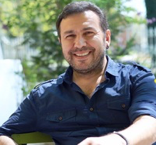
Doç.Dr. İlker Deniz Başuğur 1986 yılında Silahlı Kuvvetler Askeri Mızıka Okuluna girerek müzik hayatına başladı. 1989 yılında kabul edildiği Hacettepe Üniversitesi Ankara Devlet Konservatuvarında ülkenin önde gelen sanatçı/eğitimcileri ile çalışma imkanı buldu. Müzik hayatını orkestra şefi, besteci ve akademisyen olarak sürdüren BAŞUĞUR, besteci yönüyle de özellikle çocuk ve gençlik koroları için eserler yazdı, ödüller aldı. 2003 yılında Dünya Askeri Bandolar Festivalinin organizasyonunda görev aldı. 2010 yılında NATO’nun sağladığı özel bütçe ile Ankara’da “Terörizmin Olumsuz Etkilerine Karşı Müzikle Terapi” adlı uluslararası bir sempozyum düzenledi. 2015 yılında “Dünya&Avrupa Bakır Nefesli Çalgılar Birliği”nin Türkiye koordinatörü oldu. Birliğin Türkiye’deki ilk etkinliği olan Ankara Bakır Çalgılar Haftası (Ankara Brass Week) organizasyonunu ve müzik direktörlüğünü üstlendi. Bu kapsamda, 2019-2020 yıllarında çeşitli ülkelerde düzenlenecek olan “Dünya&Avrupa Bakır Nefesli Çalgılar Birliği etkinliklerinde orkestra şefi olarak davet edildi. Ayrıca Bohemya Senfoni Orkestrası ile Prag’da ve Roma’da orkestra şefi olarak ülkemizi temsil edecek olan sanatçı, yurt içinde çeşitli orkestraların yanı sıra, Trakya Oda Orkestrası ile konuk şef olarak konserler vermektedir. İlker Deniz BAŞUĞUR halen Müzik ve Güzel Sanatlar Üniversitesi ve Hacettepe Üniversitesi Devlet Konservatuvarında öğretim üyesi olarak çalışmalarını sürdürmektedir.
Kurum: Ankara Müzik ve Güzel Sanatlar Üniversitesi, Ankara, Türkiye E-mail: denizbasugur@mgu.edu.tr ORCİD: https://orcid.org/0000-0001-7978-5709
Academiaedu: https://mgu-tr.academia.edu/DenizBasugur
Researchgate: https://www.researchgate.net/profile/Ilker-Basugur
Downloads
Published
How to Cite
Issue
Section
License
Copyright (c) 2024 Türk Müziği

This work is licensed under a Creative Commons Attribution-NonCommercial-NoDerivatives 4.0 International License.


